
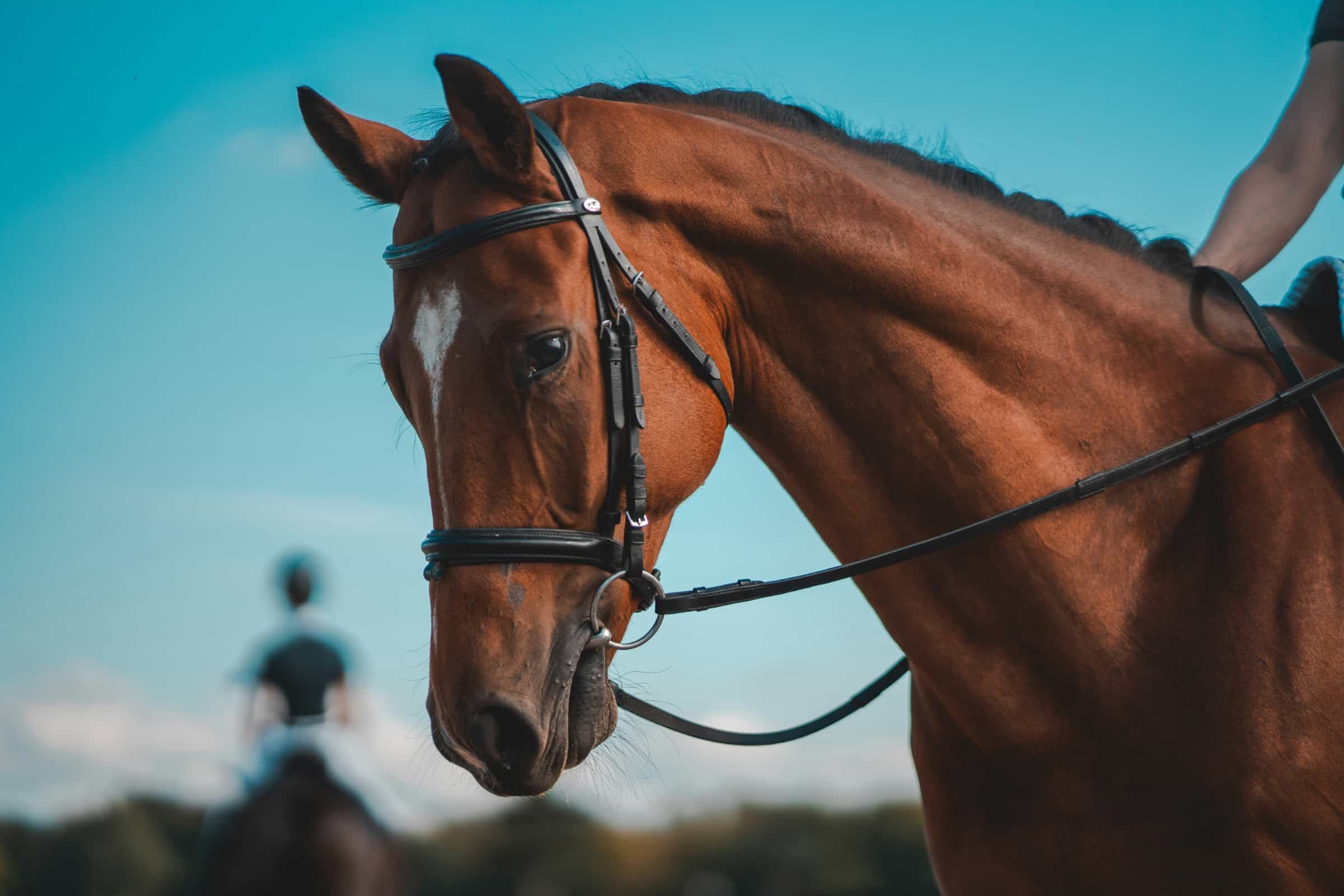

The drive home after a good show is one of the best feelings in this sport, and if you’ve had one of those weekends recently, you know exactly what we mean. The cooler’s in the back seat, the ribbons are on the dash, your trainer is already texting about the next show, and you’re mentally replaying that final line on repeat.
You get home, you unload, you do the basics: hay, water, a once-over, maybe some liniment on the legs. You’re tired, your horse is tired, and you both go to bed. Then you get back on four days later and something feels not quite right. He’s stiff through the back. His left rein feels heavy. His canter transition is sticky in a way it wasn’t before you left, and you think maybe he had a hard trip, maybe the footing at the show was deep, maybe he just needs another day.
Maybe. Or maybe his body is still carrying the show and nobody’s helped him put it down yet.
What a Show Weekend Actually Does to Your Horse’s Body
We talk a lot about what horses give us in the ring: the collection, the power, the precision, the partnership. What we talk about less is what that performance actually costs the body, and what accumulates even before the horse ever enters the arena. A show weekend is physically demanding from the moment the trailer gets loaded, and it’s worth understanding the full picture of what your horse is managing.
Loading and hauling means your horse is bracing, balancing, and micro-adjusting for the entire trailer ride, which depending on the distance can mean hours of sustained muscular effort with no ability to move freely or self-regulate. New environment stress means an unfamiliar barn, new smells, strange horses nearby, different footing, and an activated nervous system that doesn’t fully settle until the horse feels safe. Warm-up demands at shows are often more compressed and intense than regular training sessions, with multiple riders, tight spaces, and pressure to be ready on a schedule. Then there’s the actual competition work, whether that’s a dressage test, a jumping round, or a reining pattern, which demands peak physical and neurological output. Many horses show multiple times across a weekend, meaning multiple rounds of peak demand with limited recovery in between. And then your horse does the whole trailer thing again, now on a body that’s already worked, tired, and potentially restricted.
By the time your horse steps off the trailer at home, his body has been through a lot. The legs might look fine and the attitude might be cheerful, but beneath the surface the spine is often guarded, the muscles are tight, and the nervous system is still running a little hot from the weekend.
The Recovery Window Most Riders Don’t Know They’re Wasting
Here’s the piece of post-show care that almost nobody talks about, and honestly it’s the one that makes the biggest difference: there’s a recovery window in the 48 to 72 hours after a show that either gets used well or gets wasted. When the body is in a state of post-exertion recovery, it’s actively trying to return to baseline. Inflammation is resolving, muscles are repairing, and the nervous system is attempting to downregulate from the heightened state of competition.
If restrictions from the show are addressed during this window, the body resolves them as part of the recovery process. If they’re not addressed, the body starts adapting to them instead. Muscles that are guarding a restricted joint don’t just relax on their own once the guarding becomes habitual, and compensation patterns that developed over a show weekend become the new normal if nothing interrupts them.
This is why horses who show consistently without a structured recovery plan often feel progressively off as the season goes on. Each show adds a little more to what the body is carrying, and by mid-season the horse who felt great in January is inexplicably flat and resistant in June. Nobody can quite pinpoint why, but the why is the accumulated, unaddressed load of every show he’s been to since January. We see this pattern constantly, and the frustrating thing is that it’s almost entirely preventable.
Untack, Untighten, Unwind: The Framework
We use three words to think about post-show recovery because they capture the three distinct phases the horse needs to move through. They’re not complicated, and that’s intentional, because the best recovery plans are the ones that actually get followed.
Untack: The Immediate Post-Show Window
This is what happens in the first few hours after the last class, and most riders do this reasonably well. That said, there are a few specifics worth being intentional about. Cooling out properly matters more than most people give it credit for because a horse who’s been working needs a genuine cool-down, not just a quick hose and back to the stall. Walking, grazing if available, and time to let the heart rate and respiration normalize before the horse is stalled makes a real difference in how the body begins its recovery.
Hydration and electrolytes are critical, especially for Florida horses in the heat, because a horse who’s even mildly dehydrated after a show day is already compromised in his ability to recover well. Leg care matters too, whether that’s cold hosing, ice boots, or standing wraps, and the specific method is less important than the consistency. Before you head to the show dinner or the drive-through on the way home, take five minutes to really look at your horse and note anything that seems different, tight, off, or tender. Those fresh observations are far more useful than trying to remember four days later.
Untighten: Addressing the Physical Tension
This is the phase most show riders skip entirely, and it’s the most important one.
Untightening means actively addressing the physical tension the show created, because rest alone doesn’t do this. A horse can have four days off after a show and still be carrying restriction in his lumbar spine, tension through his poll, and compensation patterns in his hind end that standing in a stall did nothing to resolve. What untightening actually looks like in practice is chiropractic care to restore normal motion to restricted joints in the spine, pelvis, and extremities; soft tissue work to release the muscular holding patterns that developed around those restrictions; targeted stretching appropriate to what the horse’s body needs based on the assessment; and light, free movement that allows the horse to self-regulate without the pressure of a training agenda.
The post-show chiropractic visit is different from a maintenance visit because we’re looking specifically at what the show created. Where did the hauling leave tension? Where did the competition demands load the body unevenly? What needs to be addressed now so it doesn’t become a pattern that your horse carries into the next training cycle?
Common post-show findings include:
- Poll and cervical tension from sustained collection and contact work
- Thoracic restriction from jump rounds or lateral work
- Lumbar and sacroiliac tension from the hind end demands of collection and power
- Asymmetrical pelvic alignment from uneven loading during hauling
Addressing these within the recovery window means the body resolves them cleanly. Leaving them means the body adapts to them. The difference between those two outcomes over a full show season is enormous, and we’ve watched it play out enough times to say that with complete confidence.
Unwind: Mental and Emotional Decompression
Horses aren’t machines, and the mental load of a show weekend is real. The sensory input, the schedule, the pressure, the unfamiliar environment: all of it activates the nervous system, and a horse who comes home from a show and goes straight back into a structured training schedule hasn’t had the chance to let that activation settle.
Genuine unwinding looks like turnout time where the horse can move freely, interact socially, and decompress at his own pace. It looks like a day or two of lighter work that asks nothing demanding, just connection and gentle movement. It looks like reduced pressure in the training environment while the horse recalibrates, and attention to social needs because horses are herd animals and time with familiar companions after a stressful event genuinely helps the nervous system settle. A horse who unwinds fully between shows is a horse who shows up to the next one mentally fresh, and in our experience, the horses who seem to love showing are almost always the ones whose riders have figured out how to make the whole experience manageable, not just the performance itself.
Building Recovery Into Your Show Calendar
The best show riders we know treat recovery as part of the competition plan rather than an afterthought, and once you build it in, it stops feeling like extra work and starts feeling like just what you do.
| Timing | Recovery Priority |
| Day of show (post-competition) | Cool out, hydrate, electrolytes, leg care, observation |
| 24-48 hours post-show | Light movement, turnout, no structured training demands |
| 2-4 days post-show | Chiropractic and soft tissue work within the recovery window |
| 4-7 days post-show | Return to light training, assess how the body is responding |
| 7-10 days post-show | Normal training resumes if recovery has gone well |
| 5-7 days pre-next show | Light chiropractic and bodywork to prepare the body for competition |
This isn’t a complicated plan. It’s a consistent one, and consistency in recovery is what separates the horses who stay sound across a full season from the ones who start showing wear by summer.
Insider Tips from Dr. Philip and Dr. Angela
On the signs your horse is still carrying the show: Watch for stiffness that doesn’t warm out within the first ten minutes of movement, resistance or heaviness on one rein that wasn’t there before the show, reluctance to track up evenly behind, changes in tail carriage (a clamped or asymmetrical tail often reflects lower back tension), and behavioral changes like increased sensitivity to grooming along the back or irritability when being tacked up. Any of these is the horse telling you he’s still in recovery mode and needs support, not more work.
On the horses who need the most post-show attention: Younger horses, horses new to showing, and horses doing multiple classes across a weekend tend to carry the most post-show tension. They’re working harder physically and managing more neurologically, and building recovery care into their show experience early sets them up for a much longer, sounder career. We’ve seen young horses develop really problematic compensation patterns simply because nobody addressed what the early show seasons created in their bodies.
On making recovery part of the budget: We hear riders say they can’t afford regular chiropractic care, and we gently push back on that framing every time. The cost of one treatment after a preventable injury is almost always higher than the cost of consistent maintenance across a full season, in vet bills, in rehabilitation time, and in the shows you miss while your horse recovers. Recovery care isn’t a luxury line item. It’s a performance investment, and it pays for itself.
Your Horse Gives You Everything in That Ring
He memorizes the course, trusts your leg, collects when you ask, extends when you need it, and tries his heart out even when the warm-up was chaotic and the footing wasn’t ideal. The least we can do is help him put down what the show cost him.
Untack, untighten, unwind. Three phases, one horse who comes back to the next show feeling like himself instead of carrying the last one into the ring with him. If you’re in the Gainesville area and your show horse is due for some post-competition care, we’d love to hear from you.
Reach out to Synchrony Chiropractic and let’s help your horse recover the way he deserves.