
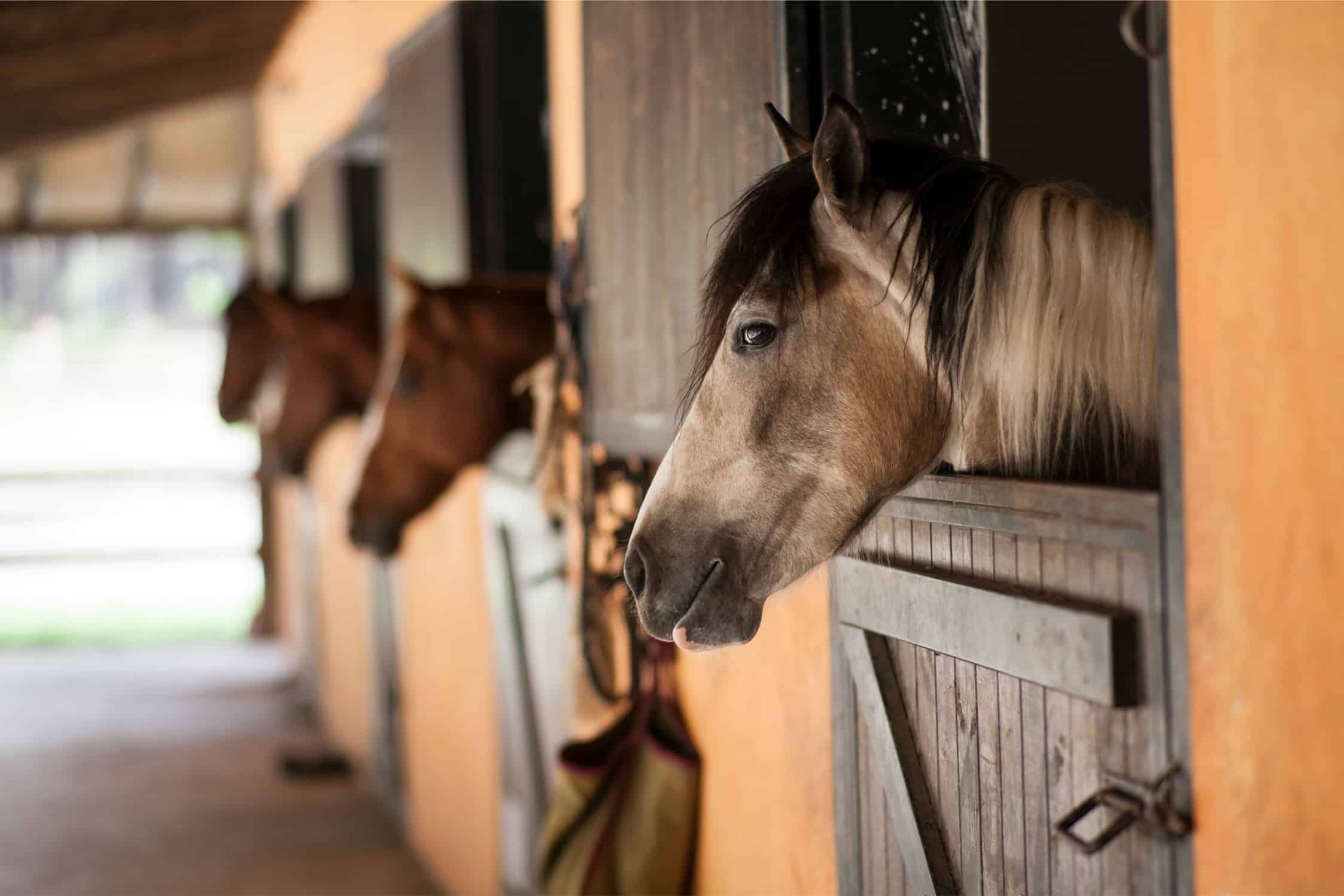

There’s a particular kind of frustration every Gainesville horse owner knows, and if you’ve been in this community for any length of time, you’ve felt it at least once.
Your horse feels off. Not lame, not dramatic, just off. He’s a little resistant on the left rein. His transitions feel flat. He’s not moving through his back the way he used to, and you know something isn’t right. But the thought of hitching up the trailer, hauling him across town, unloading a stressed horse at an unfamiliar facility, and then loading him back up again to haul home feels like a whole production you don’t have the bandwidth for right now.
So you wait. You tell yourself you’ll get to it after the next show, after the season slows down, after things calm down a little. And in the meantime, your horse keeps compensating.
Here’s the thing: getting your horse the care he needs doesn’t have to be a whole production. We come to you. We pull up to your barn, assess your horse in his own environment, and do the work right there where he’s most comfortable. No trailer stress, no unfamiliar surroundings, no adding a hauling headache on top of an already tired horse. That’s mobile equine chiropractic, and honestly? Gainesville horses are absolutely loving it.
Why Hauling Is Its Own Problem
Most horse owners have experienced the horse who loads beautifully at home and arrives at the destination already wound up, braced, and tense. That’s not just nerves. That’s the body responding to the physical demands of trailer travel, and it’s worth understanding why.
Hauling is genuinely hard on a horse’s body. Think about what your horse is actually doing during a trailer ride: he’s constantly micro-balancing against the motion of the vehicle, bracing through his legs, spine, and neck to stay upright through turns and stops, standing in a fixed position without the freedom to move and self-regulate, and managing the stress response of an environment that’s unpredictable at best. By the time he arrives at an appointment after a haul, his body is already in a state of tension. The muscles are braced, the nervous system is activated, and the horse standing in front of us is not the same horse who was standing quietly in his paddock an hour ago.
That matters a lot for assessment. Tension from hauling can mask some restrictions and mimic others, so the picture we get in a horse’s home environment is cleaner, more reliable, and honestly just more useful. And for a horse who’s already restricted or uncomfortable, adding a trailer ride on top of that is asking the body to manage even more before the appointment even begins. We’ve seen horses arrive at facilities so braced from the haul that we spent half the appointment just getting them to settle. That’s not good for anybody, especially not the horse.
What a Mobile Equine Chiropractic Appointment Actually Looks Like
We know “barn call” can sound a little vague, so let us walk through exactly what to expect when we pull up to your property.
We start by watching before we ever touch. Before hands go on the horse, we observe him moving at liberty if possible, or hand-walked on a flat surface. We’re noting his posture at rest, how he carries his head and neck, whether his hind end tracks evenly behind his front, and where his body seems to be holding tension. Horses tell us an enormous amount just by how they stand and move when nobody’s asking anything of them, and that information shapes everything that comes next.
Then we move into palpation, working systematically along the spine and feeling for areas of reduced motion, asymmetry, and muscular guarding. We check the poll, the cervical spine, the thoracic and lumbar regions, the sacroiliac area, and the pelvis, along with the extremities, shoulders, and hips depending on what the movement observation revealed. The adjustment follows from there, with targeted, specific, controlled inputs to restore normal motion to restricted joints. Most horses tolerate this easily in their home environment, and a lot of them show immediate responses that never get old to witness: a deep breath, a yawn, a lowering of the head, a softening through the whole body that you can actually see happen in real time.
We close every appointment with a conversation about what we found, what we addressed, and what to watch for in the days following. The whole thing happens at your barn, in your horse’s world, without a single ramp involved.
The Gainesville Horse Community and Why Mobile Care Fits It Perfectly
Gainesville isn’t a casual horse town, and we love that about it. The equestrian community here is active, competitive, and genuinely invested in their horses. From hunters and jumpers to dressage horses, trail horses, barrel racers, and everything in between, Gainesville riders put their horses to work and they take that responsibility seriously.
That also means Gainesville horses are working hard year-round, and Florida’s climate is one of the great gifts of riding here. No frozen ground, no icy arenas, no months of forced downtime. The trade-off is that horses who live and compete in Florida don’t get the natural reset that colder climates provide. They train through the summer, show through the fall, and keep going through the winter. Restriction accumulates quietly across that kind of schedule, and a horse who might have self-corrected with a few weeks of lighter work in a cooler climate is instead adding more miles on a body that never fully got to rest. By mid-season, a lot of Gainesville horses are carrying more tension than their riders realize, and the performance changes that show up in the arena are the body’s way of finally making the conversation loud enough to hear.
Mobile care removes the last remaining barrier to actually doing something about it. You don’t have to block out a half day for hauling, coordinate barn help to get the horse loaded, or stress a horse who’s already telling you he doesn’t feel great. You just schedule the barn call and we handle the rest.
What We See Most Often in Gainesville Horses
Every horse community has its patterns, and Gainesville is no different. Here’s what we commonly find when we pull up to a barn here:
- Lumbar and sacroiliac restriction from the demands of collection, lateral work, and the repetitive loading of a full show season
- Cervical tension in horses who are working consistently in a frame and dealing with contact-related tightness through the neck and poll
- Thoracic guarding from jump work, trail riding on uneven terrain, and horses who’ve been compensating for a restriction somewhere else in the body
- Asymmetrical hind end engagement that shows up as crookedness, lead issues, or difficulty with lateral movements
- Shoulder restriction in horses who’ve taken repeated jump landings or trail obstacles on one preferred side
None of these show up on a standard vet check as an obvious problem, but every single one of them affects how the horse moves, how he feels to ride, and how willing he is in the work. The horses who come out of a barn call moving noticeably better are almost never the ones we expected to find the most in. They’re usually the quiet ones, the “he’s just been a little flat lately” ones, the ones whose owners almost didn’t call because they weren’t sure the problem was big enough. It’s always worth the call.
Insider Tips from Dr. Philip and Dr. Angela
On the best time to schedule relative to your show calendar: Aim for five to seven days before a major show rather than the day before. The body needs a little time to integrate an adjustment and settle into the new motion pattern, and a horse adjusted the day before a show may feel slightly different than usual as things recalibrate. Give it a few days of normal work and you’ll head into the show with a horse who’s moving at his best. We’ve seen that timing make a real difference in how horses come out of the gate.
On what to have ready when we arrive: A flat, non-slip surface for the movement assessment makes a real difference, whether that’s concrete with good footing, packed dirt, or a rubber mat aisle. Having the horse reasonably clean through the back and topline helps with palpation too. And if you’ve been noticing specific things under saddle, write them down before we get there. Your observations from the saddle are some of the most valuable information we have, and we’d rather hear “he feels stiff picking up the left lead” than have to guess what you’ve been experiencing.
On how often to schedule for an actively competing horse: For horses in regular competition, every four to six weeks during the show season keeps restriction from building and compounding. The off-season is a great time for a full assessment and addressing anything that accumulated during the year, so you’re starting the next season with a clean slate instead of carrying last year’s baggage into January.
Who Benefits Most From Mobile Care
Honestly, every horse benefits from care in their home environment, but there are a few situations where mobile care is especially valuable. Horses who are difficult or anxious to load are an obvious one because there’s no reason to add that stress on top of a body that already needs help. Multi-horse barns where hauling everyone in is genuinely impractical are another, and horses mid-show-season who are working hard and don’t need the additional stress of a haul fit squarely in this category too.
The group we think about most, though, is owners who’ve been putting care off because the logistics felt like too much. The number of horses whose care gets delayed simply because hauling feels like a barrier is significant, and it’s one of the reasons we built our practice around coming to you. Your horse is already home. His care should be able to find him there.
Gainesville, Your Horses Have Been Patient Long Enough
If you’ve been noticing changes in your horse and telling yourself you’ll get to it when things slow down, here’s your sign that things don’t have to slow down for your horse to get the support he needs. We come to your barn, we assess your horse in his environment, we do the work, and you keep your afternoon. It’s genuinely that simple.
The horses who get consistent, proactive chiropractic care are the ones who stay sound longer, perform more consistently, and keep doing the work their riders love doing with them. Gainesville has an incredible horse community, and we’d love to help keep those horses moving the way they deserve to.
Reach out to Synchrony Chiropractic to schedule your barn call. We can’t wait to meet your horse right where he lives.