
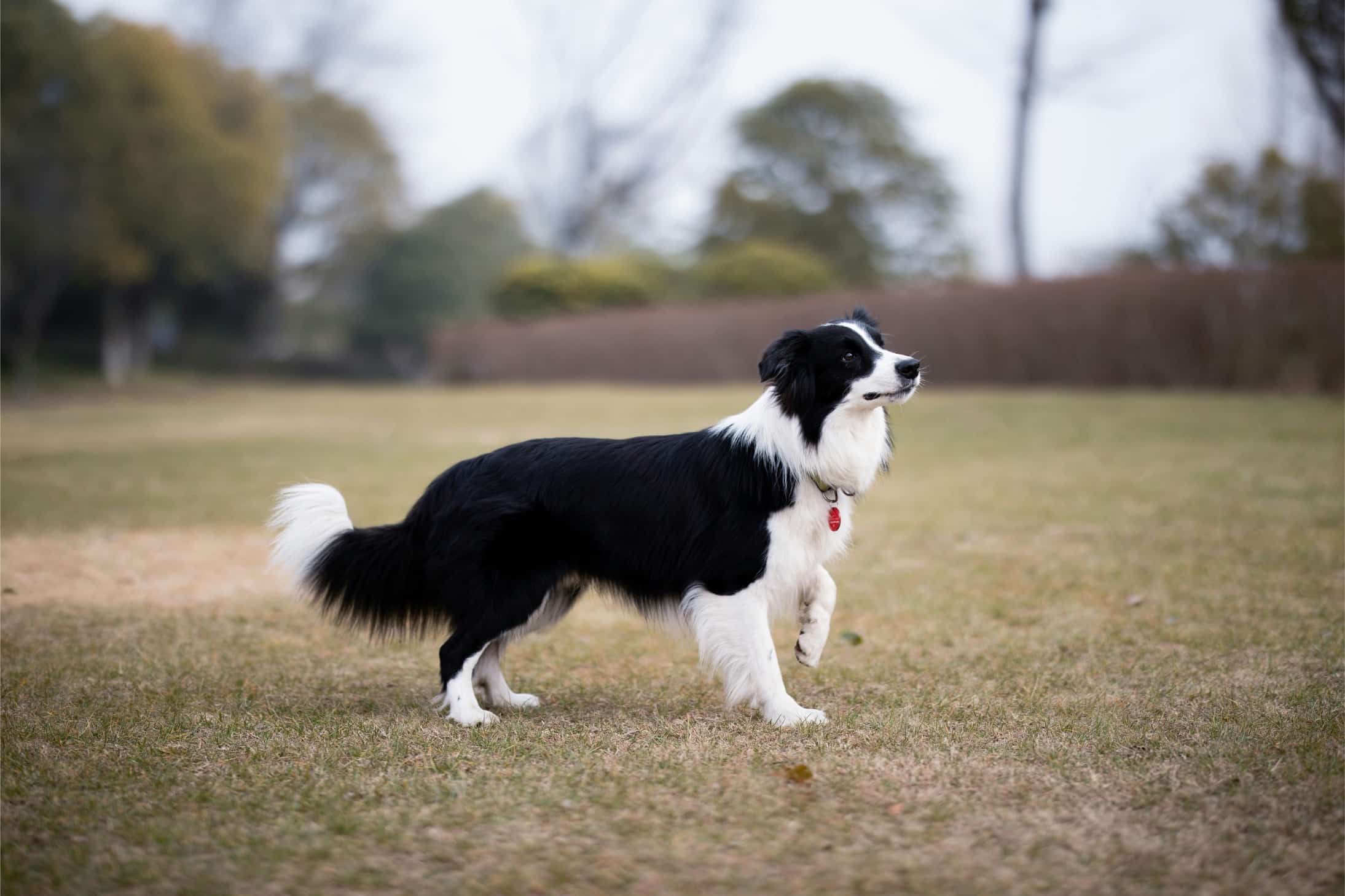

It’s Sunday morning and your dog is moving a little funny.
Yesterday he was absolutely flying, whether that was a long trail run, a full day of agility, an afternoon of fetch that neither of you wanted to end, or just one of those weekend days where he went full send from start to finish. He seemed completely fine when you got home. He ate his dinner, found his spot on the couch, and passed out like the athlete he is. But this morning something’s off, and now you’re standing in the kitchen watching him walk to his water bowl and doing that thing where you’re not sure if you’re overreacting or dangerously under-reacting.
So you do what every dog owner does. You Google it. And thirty minutes later you’ve convinced yourself it’s either a minor muscle pull or complete ligament rupture, and you’re no closer to knowing what to actually do.
Here’s the guide you should have found instead.
Why This Question Is So Hard to Answer
The reason “is my dog sore or injured” is such a difficult question isn’t because the answer is complicated. It’s because dogs are genuinely excellent at masking discomfort, and the early presentation of soreness and injury can look almost identical in the first few hours. Your dog isn’t going to limp dramatically for one and walk normally for the other. He’s going to do his best to keep moving and keep up with you regardless of what’s actually happening in his body, because that’s what dogs do, and honestly it’s one of the things we love most about them even when it makes our job harder.
There’s also the emotional component that nobody talks about, which is that when it’s your dog, objective observation is genuinely difficult. You’re worried, you’re attached, and you’re trying to read subtle signals through the lens of someone who really, really doesn’t want it to be something serious. That’s not a character flaw. It’s just love, and it’s worth acknowledging because it affects how clearly most of us can assess the situation in the moment.
What most owners are missing isn’t veterinary knowledge. It’s a framework for reading what they’re actually seeing, and that’s exactly what we’re going to give you.
What’s Actually Happening: Soreness vs. Injury vs. The Third Thing Nobody Mentions
Before we get into the specific signs, it helps to understand what’s actually going on in the body in each scenario, because the physiological difference between soreness and injury is meaningful and it informs everything about what you do next.
Soreness is what happens when muscles have been worked harder than they’re used to. The tissue is stressed but intact. At a cellular level, there’s micro-damage to the muscle fibers and a localized inflammatory response as the body begins repairing and adapting. This is completely normal, it’s actually how muscles get stronger, and it resolves on its own with rest and time. You’ve felt this yourself after a hard workout. Your dog feels it too, and his version looks like stiffness, reluctance to move freely, and generalized “blah-ness” for a day or two.
Injury is when tissue is actually damaged beyond normal adaptation. A muscle tear, a ligament strain, a joint capsule injury, or a bone issue. The body’s response is more significant, the pain signals are more localized and persistent, and the situation doesn’t resolve with a day of rest. This is the scenario that needs professional evaluation, and the signs look distinctly different from soreness once you know what to look for.
The third category is the one that trips people up the most because it doesn’t fit neatly into either bucket. This is restriction and compensation, where a joint in the spine or an extremity has lost its normal range of motion and the body is working around it. It’s not acute soreness from a hard workout, it’s not an injury in the traditional sense, but it’s also not something that’s going to resolve on its own with a rest day. We see this constantly in active dogs, and it’s the category most likely to get mislabeled as soreness and ignored until it becomes something more significant.
The Signs That Point to Soreness
If your dog hit it hard yesterday and is moving a little stiffly this morning, here’s what genuine post-exercise soreness looks like:
- Stiffness that warms out. The dog moves carefully for the first ten to fifteen minutes and then loosens up meaningfully as the body gets moving. If he’s walking more normally after a short warm-up, that’s a really good sign.
- Generalized rather than localized. Soreness tends to affect the whole dog rather than one specific spot. He seems generally stiff or tired rather than clearly favoring one area.
- Normal weight bearing at rest. When he’s standing still, he’s distributing his weight evenly. He’s not consistently shifting off one leg.
- Everything else is normal. Appetite is good, demeanor is his usual self, he’s interested in what’s happening around him. Soreness makes dogs move carefully but it doesn’t make them act sick.
- It makes sense given what he did. He ran eight miles yesterday for the first time in a month, or he did three hours of agility in the heat, or he swam for two hours straight. The activity level and the stiffness connect logically.
- Meaningful improvement within 24-48 hours. Soreness resolves. If he’s noticeably better by Monday than he was Sunday morning, you’re almost certainly dealing with normal post-exercise recovery.
- No specific point of sensitivity. When you run your hands gently along his body, there’s no single spot where he flinches or pulls away. General fatigue feels different from localized pain.
The Signs That Point to Injury
These are the signs that mean you’re likely dealing with something beyond normal soreness, and they warrant a call to your vet rather than a rest day and some monitoring:
- Localized pain at a specific point. When you gently palpate along the leg, spine, or joint and find one specific place where he reacts consistently, that’s meaningful. Soreness doesn’t do that. Injury does.
- Consistent weight shifting or non-weight bearing. If he’s consistently keeping weight off a specific leg, or refusing to bear weight on it at all, that’s a significant signal. Occasional shifting is normal. Consistent avoidance is not.
- Swelling, heat, or visible change. Any visible swelling around a joint, heat coming from a specific area, or a change in the way a limb looks compared to the other side warrants immediate attention.
- Worsening rather than improving. Soreness gets better with rest and gentle movement. Injury often gets worse, or at best stays exactly the same. If Monday is worse than Sunday, don’t wait to see what Tuesday brings.
- No improvement with gentle warm-up. If the dog is moving just as poorly after fifteen minutes of easy movement as he was when he first got up, that’s a sign the body isn’t just working through stiffness.
- Behavioral changes beyond careful movement. A sore dog is still himself, just a little slower. An injured dog may hide, refuse food, react unusually to being touched, be unable to settle, or pant when he shouldn’t be. These are pain signals, not just stiffness.
- Something audible happened. If there was a yelp, a pop, or any kind of audible event at the moment of onset, skip the observation window. That’s a direct line to the vet.
The Third Category: Restriction and Compensation
Here’s what we want every active dog owner to understand, because it’s the piece that gets missed most often and it has real consequences when it does.
Restriction isn’t soreness and it isn’t injury in the traditional sense, but it’s the body telling you something needs attention. When a joint in the spine or an extremity loses its normal range of motion, whether from repetitive stress, an old minor incident, or a compensation pattern that developed around something else, the dog starts moving around it instead of through it. The dog isn’t in acute pain the way an injured dog is, but he’s also not just sore and in need of a rest day.He’s compensating, and compensation that goes unaddressed tends to become the next injury.
Here’s how restriction and compensation typically shows up compared to the other two categories:
| Category | Onset | Location | Warm-Up Effect | Timeline |
| Soreness | After hard or unusual activity | Generalized | Improves significantly | Resolves in 24-48 hours |
| Injury | Often a specific moment or event | Localized, specific | Little to no improvement | Worsens or stays the same |
| Restriction/Compensation | Gradual, often no clear event | Specific but not acutely painful | May improve slightly but returns | Persists and often worsens over time |
The dog with restriction often gets labeled as “a little off” or “not quite right” for days or weeks, and the owner keeps waiting for it to resolve on its own. It doesn’t, because rest doesn’t restore normal joint motion. This is where a chiropractic assessment is genuinely the right tool, because we can identify exactly where the restriction is, what compensation patterns have developed around it, and address the actual source of the problem rather than just waiting.
The 24-48 Hour Framework
When you’re not sure what you’re dealing with, here’s a practical framework for the observation window:
In the first few hours: Don’t push the dog to move more than he needs to, but don’t enforce complete rest either. Let him move naturally and observe. Note specifically which leg or area seems affected, whether the weight bearing is consistent, and how his demeanor is overall.
At the 12-hour mark: Offer a short, slow walk on a flat surface and watch carefully. Is he moving better than he was? Worse? The same? Note how he looks at the start versus the end of five minutes of easy movement.
At the 24-hour mark: This is the key checkpoint. Genuine soreness should be showing meaningful improvement by now. If he’s noticeably better, you’re likely on the right track with rest and monitoring. If he’s the same or worse, it’s time to make a call.
At the 48-hour mark: If anything is still off at 48 hours, stop waiting. Whether it’s soreness that isn’t resolving, an injury that needs diagnosis, or restriction that needs to be addressed, the 48-hour window is long enough. Waiting longer rarely gives you more information and sometimes allows a manageable situation to become a more complicated one.
When to Skip the Observation Window Entirely
There are situations where you don’t do the 24-48 hour framework. You just call the vet immediately. Here’s that list, and please take it seriously:
- Non-weight bearing on any limb with no gradual improvement in the first hour or two
- Visible swelling, deformity, or bone abnormality of any kind
- Significant pain signs: panting when he shouldn’t be, shaking, inability to settle, crying or vocalizing
- Something audible at the moment of onset, whether that was a yelp, a pop, or any other sound
- Dragging a limb or any neurological symptom like stumbling, crossing legs, or knuckling over
- Sudden onset with no obvious cause, especially in a dog who wasn’t doing anything particularly demanding
- A dog who won’t let you touch a specific area and is normally fine with handling
These aren’t wait-and-see situations. They’re call-right-now situations, and the difference between catching something early and catching it late can be significant both for recovery time and outcome.
Where Chiropractic Fits Into the Picture
We want to be clear that chiropractic care isn’t the first call for an acute injury. If something significant has happened, the first call is your vet. Full stop. But there are several situations where chiropractic assessment is exactly the right next step:
- After the acute phase has been cleared and your vet has ruled out fractures or significant tissue damage but the dog still isn’t moving quite right
- When imaging is normal but something still feels off, because imaging doesn’t capture restriction, compensation patterns, or functional joint mobility
- When soreness keeps happening after the same activities, which is often a sign that restriction is contributing to how hard certain areas are working
- When the dog is “almost right” but not quite for longer than makes sense for the activity level
- As a proactive tool for active and athletic dogs before things reach either the soreness or injury category at all
The dogs we help most effectively aren’t always the ones in obvious distress. They’re often the ones whose owners noticed something subtle, trusted their instincts, and came in before a manageable situation became a complicated one.
Insider Tips from Dr. Philip and Dr. Angela
On the most useful observation technique: Walk your dog slowly on a flat, non-slip surface and watch from behind.This angle reveals asymmetry in the hind end that’s almost impossible to see from the side. You’re looking for whether the hips are moving evenly, whether the hind feet are tracking symmetrically, and whether there’s any hitch or skip in the rear. Do the same from the front for the forelimbs. Video it if you can, because you’ll catch things on playback that you miss in real time and it’s incredibly useful information to have when you’re describing what you’re seeing to a vet or to us.
On what to note before you call anyone: Before you pick up the phone, jot down when you first noticed the issue, what activity preceded it, which leg or area seems affected, whether weight bearing is consistent or inconsistent, how appetite and demeanor are, and whether there’s been any change since you first noticed. That information turns a vague “he seems off” into a useful clinical history that helps whoever you’re talking to give you better guidance faster.
On the mistake most owners make in the first 24 hours: The most common one is enforcing complete crate rest immediately, which isn’t always the right call for soreness. Gentle movement helps soreness resolve. The second most common one is the opposite: continuing normal exercise because the dog seems willing. A dog who’s willing to push through is not the same as a dog who’s fine to push through, and the fact that he’ll do it doesn’t mean he should.
You Know Your Dog Better Than Anyone
Here’s the thing we want to leave you with. You don’t need a veterinary degree to read your dog’s body. You need a framework, you need to know what you’re looking for, and you need to trust what you’re actually seeing rather than what you’re hoping to see.
Not every limp is an emergency, and panicking about every post-adventure stiff morning isn’t good for you or your dog. But some limps are emergencies, and knowing the difference means you’re not in the position of having waited too long on something that mattered. The framework is simple: watch carefully, note what you see, give soreness 24-48 hours, and don’t give injury that same grace period.
And when you’re genuinely not sure what you’re dealing with, that’s what we’re here for. You don’t have to have it all figured out before you reach out. Sometimes the most useful thing we can do is help you determine which category you’re in and what the right next step looks like from there.
Reach out to Synchrony Chiropractic any time you’re not sure what your dog’s body is telling you. We’d rather answer the question early than see you after it’s been waiting too long.