
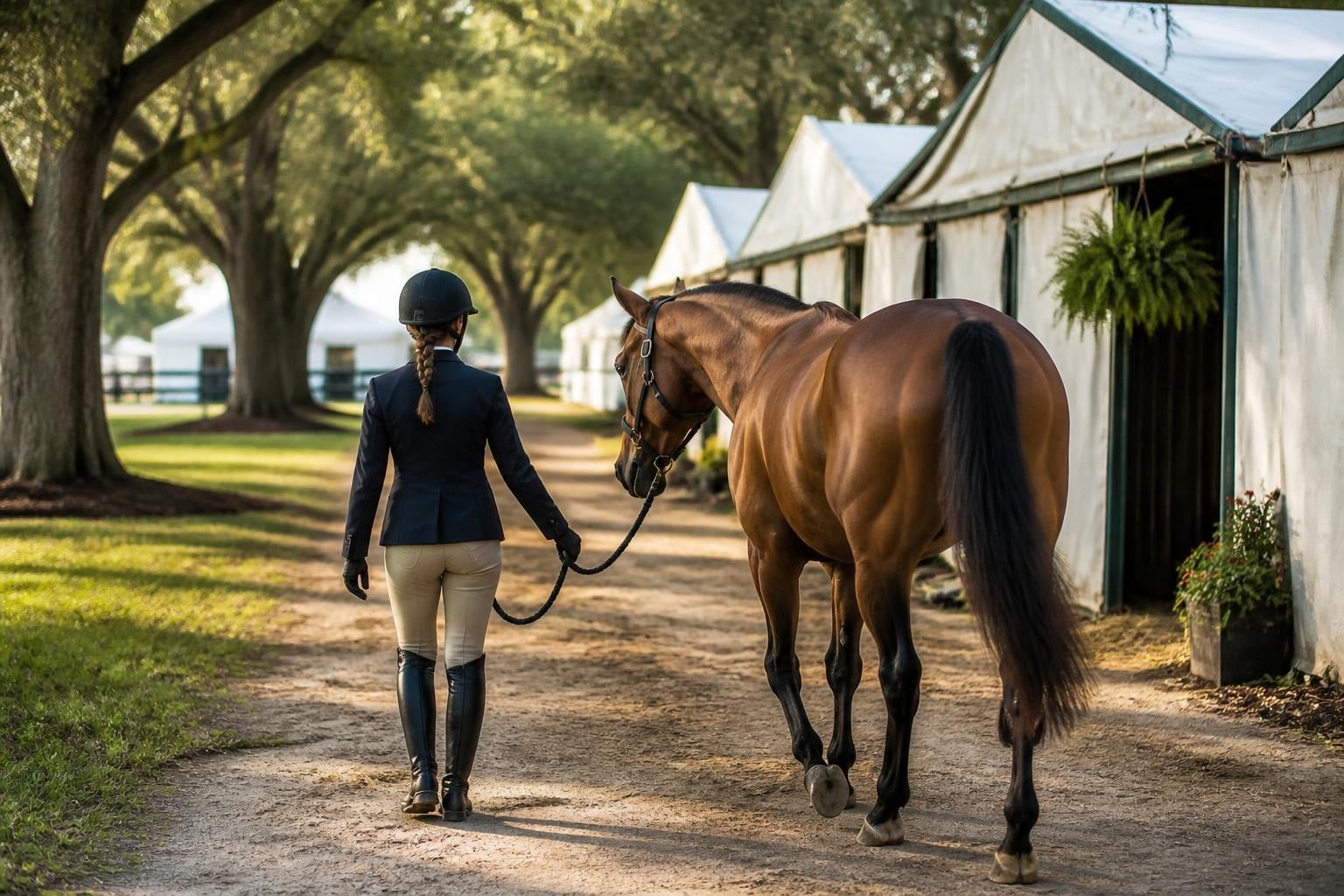

It was one of those show mornings when the coffee went cold before the first class was called. Your horse had been standing in a 10 by 10 since you unloaded him yesterday afternoon.
Show season around Ocala is in full swing in November. Multi-day shows are a big part of it.
Here’s what nobody tells you about show week. Most of it isn’t spent in the ring.
The hours between classes add up
A rider might be in the saddle for a few short classes and a warm-up each day. The rest of the time, a lot of horses are standing in a temporary stall.
At home, the same horse may get turnout, grazing, and room to wander. At the show, all of that shrinks.
Your horse isn’t being difficult in the warm-up. He’s been standing still since dinner.
Start with a safe, comfortable stall
Your horse will spend a lot of time in that stall, so set it up well. Extension guidance on traveling with horses suggests checking the stall before your horse goes in.
Look for:
- Nails, broken boards, or anything sticking out
- Holes or gaps in walls and floors
- A door that works and opens all the way
- Enough bedding to cover the whole floor
- A safe spot to hang water buckets
It takes five minutes. It can save your whole weekend.
Keep the home routine as much as you can
Familiar habits travel well. The same extension guidance recommends keeping your horse’s feeding routine as close to home as possible, including bringing the hay he normally eats.
Ideally, a stalled horse has hay available most of the time. Some horses also drink less away from home, so keep buckets full, clean, and checked often.
If your horse is picky about strange water, practice at home before the show. Bringing water from home is another option.
Build movement into the show day
This is the part that gets lost. When the schedule is packed, the horse’s day can become stall, ring, stall.
California’s minimum horse care standards set a daily baseline for stall-confined horses. They call for at least 30 minutes of turnout or 15 minutes of controlled exercise, like hand-walking. That’s a floor, not a goal.
At a show, you can usually do better than the minimum with a few habits:
- A hand-walk first thing in the morning
- Grazing breaks wherever the grounds allow it
- A loose, easy walk before you tack up
- Another walk between classes when there’s a long gap
- An evening walk after the barn quiets down
None of this needs to be long or fancy. Short, regular breaks beat one big effort at the end of the day.
If your veterinarian has given your horse specific limits, follow those first.
Use the warm-up for warming up
A horse who has been standing for hours may feel stiff in the first few minutes. That’s worth planning for instead of fighting.
Give yourself extra walk time before you ask for real work. Let your horse stretch, look around, and settle into the footing.
Then build gradually, the same way you would at home on a cold morning.
Watch for changes from his normal
Show week is busy, but small changes are still worth noticing. You know how your horse moves and behaves at home, and that’s your baseline.
Pay attention if your horse:
- Leaves hay or water untouched
- Seems stiff for longer than usual after standing
- Resists bending one direction more than normal
- Shifts weight or paws more than he does at home
- Looks dull, uncomfortable, or unusually restless
Any of these is a reason to slow down and take a closer look. Signs of colic, lameness, or real discomfort need your veterinarian right away, show or no show.
Coming home
After a big show, give your horse a few easy days to recover. Turnout, simple hacks, and a return to normal routines all help him settle back in.
Notice how he moves in the first couple of days at home. That’s often when you see how the week really went.
Where we fit
Show season puts real demands on a performance horse. Chiropractic care can be one part of keeping your horse comfortable through it, alongside your veterinarian, farrier, and trainer.
We come to your barn before or after a show, so your horse stays in familiar surroundings. All we need is cross-ties or a hand on the lead.
If your horse has been coming out of the stall stiffer than you’d like during show season, we’d be glad to take a look. Text us at 352-356-8665 to book.