
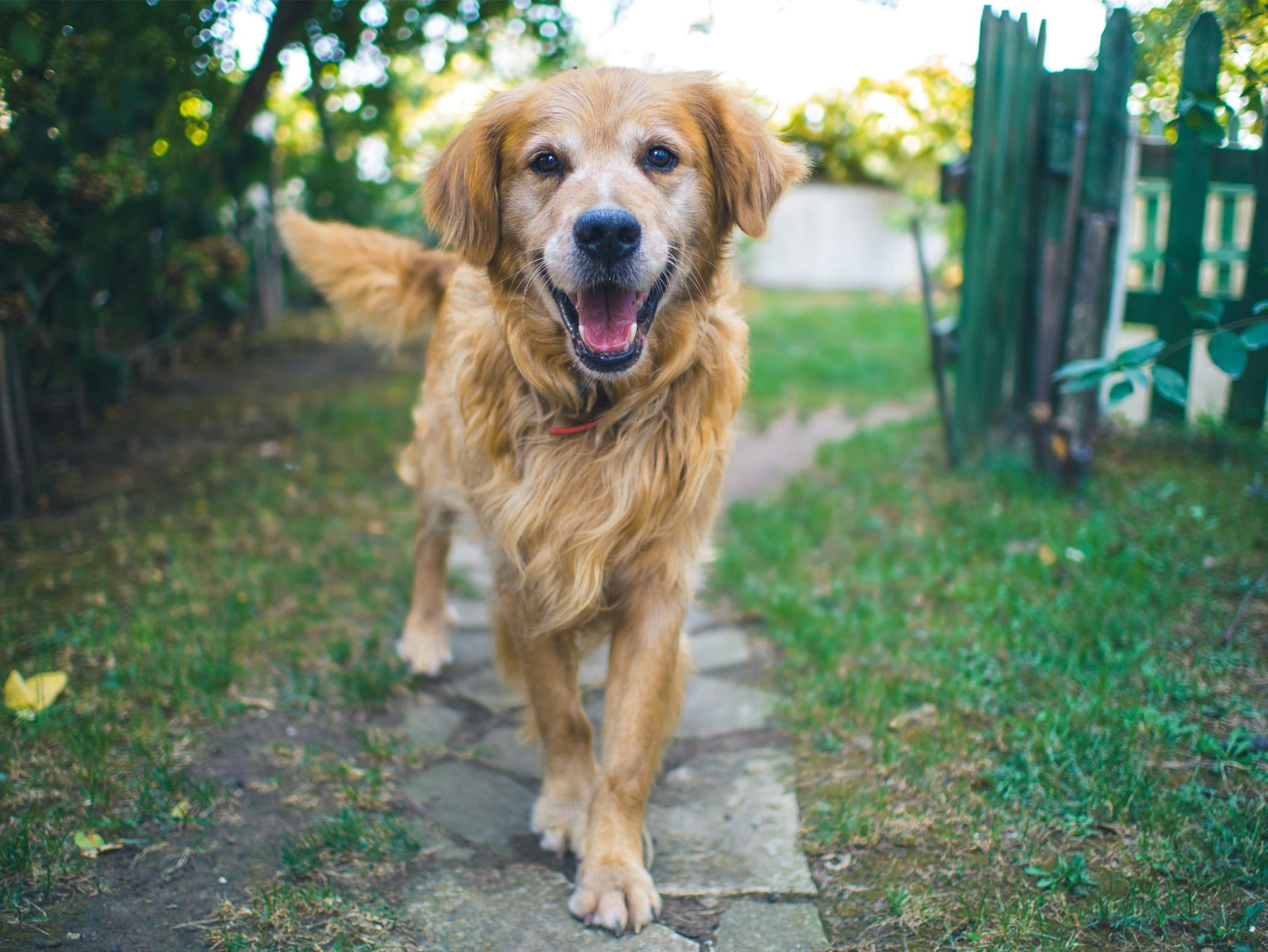

You remember exactly what she used to be like.
The dog who heard the leash jingle from two rooms away and was at the door before you even got there. The one who launched herself into the back of the car with zero hesitation, who pulled toward the trailhead like the trail was personally calling her name, who flopped onto the couch at the end of the day because she’d genuinely earned it. Now you watch her take a few careful steps before she finds her rhythm in the morning, you notice she doesn’t jump up anymore, and you’ve started parking closer to the trail entrance without even thinking about it.
Somewhere along the way, someone probably told you this is just what happens. She’s getting older. Keep her comfortable. Maybe it’s time to think about pain management. But here’s what that conversation often leaves out: comfortable isn’t the ceiling. There’s a real difference between managing decline and actually addressing what’s driving it, and for a lot of dogs, the mobility story isn’t over just because it started changing.
The Problem With “Just Managing It”
Pain management has its place, and we’re not going to tell you medication is never the right answer because sometimes it absolutely is. But there’s a version of the “keep her comfortable” conversation that leaves owners thinking their only job now is to make the decline as gentle as possible, and that framing sells a lot of dogs short.
Managing symptoms and addressing causes are two different things. A dog on anti-inflammatory medication may move more comfortably, and that’s genuinely valuable, but the medication isn’t restoring motion to a restricted joint. It’s not retraining a compensation pattern that’s been loading one side of the body unevenly for two years. It’s not rebuilding the muscle mass that atrophied while the dog was protecting a sore area. The owners who get the best outcomes for their dogs are the ones who ask what’s actually causing this and what can be done about the cause, and that question opens up a much more interesting conversation than how to make her comfortable while she declines.
What’s Actually Happening in a Dog With Mobility Changes
Before we get into options, it’s worth understanding what’s going on beneath the surface because it changes how you think about what help is actually needed. Mobility loss in dogs is almost never just one thing, and the picture is more connected than most people realize.
Joint restriction develops when a joint in the spine or extremities loses its normal range of motion from old injuries, repetitive stress, compensation patterns, or just the cumulative effect of years of activity. When a joint is restricted, the nervous system knows immediately and starts routing signals differently to protect the area.
Muscular guarding follows because the muscles around a restricted joint tighten to stabilize and protect it, and over time those tight muscles become the new normal. The dog moves around the restriction instead of through it, which leads to compensation spreading throughout the body as other parts pick up the load. A dog protecting her right hip loads her left side more heavily, her lumbar spine starts compensating for the asymmetry, and her shoulders take on more weight as she shifts forward. What started as one issue becomes a full-body pattern.
Proprioception suffers as a result of all of this, because the body’s sense of where it is in space depends on clear communication between the joints and the nervous system. When that communication is disrupted by restriction, proprioception gets fuzzy and the dog becomes less confident on uneven surfaces, hesitates at stairs, and moves more carefully because she’s genuinely less sure of where her body is. This is why a dog can have relatively clean imaging and still struggle to move comfortably, and it’s why functional problems require functional solutions.
The Dog Mobility Option Menu
Here’s where the conversation gets genuinely useful, because there are more tools available for dog mobility than most owners ever hear about in a standard fifteen-minute vet appointment. Here’s an honest breakdown of what exists, what each option addresses, and what to expect from each one.
| Option | What It Does | Best For |
| Chiropractic care | Restores joint motion, clears nervous system interference, addresses compensation patterns | Foundation for most mobility cases; nervous system and spinal health |
| Canine rehabilitation | Rebuilds strength, retrains movement patterns, improves balance and coordination | Dogs with muscle atrophy, post-injury rebuilding, movement retraining |
| Laser therapy | Reduces inflammation, supports cellular healing, pain modulation | Arthritic joints, soft tissue inflammation, post-adjustment support |
| Hydrotherapy/underwater treadmill | Low-impact movement, muscle rebuilding without joint loading | Dogs who can’t tolerate weight-bearing exercise on land |
| Acupuncture | Nervous system regulation, pain modulation, circulation support | Neurological cases, chronic pain, dogs who need systemic support |
| Environmental modifications | Reduces daily physical load and movement barriers at home | Every mobility dog; makes all other interventions more effective |
Chiropractic Care
This is where we start with most dogs experiencing mobility changes, because the spine and nervous system are almost always involved regardless of what else is going on. Chiropractic adjustments restore normal motion to restricted joints, and when those joints move properly again the muscles guarding them can release, the nervous system communication clears, proprioception improves, and the compensation patterns that have been loading the body unevenly start to unwind. For dogs with mobility changes, this often means faster and more meaningful improvement than owners expect, not because it’s magic but because removing the interference the body has been working around frees up an enormous amount of energy and function.
Canine Rehabilitation
Think of this as physical therapy for dogs, where certified canine rehabilitation practitioners work with targeted strengthening exercises, balance training, and movement retraining. This is especially valuable for dogs who’ve been compensating for a long time and have developed muscle atrophy in the areas they’ve been protecting. You can free the joint through chiropractic, but if the muscles that support it are weak and deconditioned, the dog needs to rebuild that foundation. Rehab is how that happens, and the two modalities work really well together.
Laser Therapy
Low-level laser therapy uses specific wavelengths of light to reduce inflammation and support tissue healing at the cellular level. It’s non-invasive, painless, and well-tolerated by most dogs, and it works particularly well alongside chiropractic care for dogs dealing with arthritic changes or soft tissue inflammation. The laser addresses the inflammatory component while chiropractic addresses the mechanical and neurological component, and together they cover more of the picture than either does alone.
Hydrotherapy and Underwater Treadmill
For dogs whose joints can’t tolerate the load of normal land-based exercise, water provides a genuinely elegant solution. The buoyancy reduces the weight the joints have to bear while the resistance of the water still challenges the muscles, and an underwater treadmill allows a dog to walk and rebuild muscles that have been underused due to pain or restriction without the impact that would make the same movement uncomfortable on land. We’ve seen dogs who could barely manage a short walk on pavement move with real freedom in a water treadmill, and that kind of movement is incredibly therapeutic both physically and emotionally for a dog who hasn’t felt that way in a while.
Environmental Modifications
These are the changes you make at home that reduce the physical demand on your dog’s body every single day, and they’re not flashy but they make a real difference when combined with hands-on care:
- Non-slip rugs on hard floors to reduce the effort and anxiety of navigating slippery surfaces
- Orthopedic or raised beds that are easier to get in and out of and reduce pressure on joints during rest
- Ramps or steps for furniture and vehicles to eliminate high-impact jumping
- Elevated food and water bowls to reduce neck and shoulder strain during meals
- Shorter, more frequent walks instead of one long demanding outing that leaves the dog stiff for the rest of the day
How to Know Where to Start
The option menu can feel overwhelming when you’re looking at it cold, so here’s the honest answer: start with an assessment. Before you decide which tools your dog needs, you need to understand what’s actually driving the mobility changes. A chiropractic assessment gives you a clear picture of where the spine and nervous system are being affected, where compensation patterns have developed, and what the body most needs right now. From there, additional modalities can be layered in based on what the assessment reveals, and most dogs with meaningful mobility changes benefit from a combination of approaches rather than a single intervention.
What Progress Actually Looks Like
We want to be real with you here because unrealistic expectations create their own problems. Progress for a dog with mobility changes is usually gradual and then suddenly obvious, which is a pattern we see constantly and one that’s worth preparing for. The first signs tend to be small: getting up from a lying position a little more smoothly, the morning stiffness clearing faster than it used to, a little more willingness to walk on the surfaces that used to seem uncomfortable, improved confidence on stairs or uneven ground. These small changes accumulate, and then one day you realize she went to the car without hesitating, got on the couch on her own, or pulled a little toward the trail entrance for the first time in months. That’s not a coincidence. That’s a body that’s been supported well enough to start finding its way back.
Insider Tips from Dr. Philip and Dr. Angela
On the signs owners most commonly normalize: Stiffness that “warms out” is a big one because the fact that it warms out doesn’t mean it’s fine, it means the body is managing it. Sleeping more gets dismissed as aging constantly when it’s frequently related to the energy cost of compensating. Sitting to one side consistently is often the dog protecting a hip or lower back restriction on the other side. And not wanting to jump up anymore is something owners almost universally interpret as the dog deciding the couch isn’t worth the effort, when really the dog has decided it hurts. That distinction matters a lot for what you do next.
On where to start when you’re not sure: Bring us the history. Tell us what you’ve noticed, when it started, what seems to make it better or worse, and what the vet has said so far. The more context we have going in, the more useful the assessment is coming out, and we’d rather spend ten minutes talking through the background than miss something important because we didn’t have the full picture.
On realistic timelines: Most dogs show meaningful improvement within two to four sessions, and maintenance from there depends on the dog, the activity level, and the severity of what we’re managing. Senior dogs often benefit from regular check-ins every four to six weeks to stay ahead of restriction rebuilding and keep the progress moving in the right direction.
The Trail Isn’t Gone Yet
Your dog isn’t a lost cause, and the couch to the trail is a real journey for a lot of dogs. We’ve watched it happen more times than we can count, and it doesn’t get old. The morning walk she used to love doesn’t have to be gone forever, the enthusiasm at the leash doesn’t have to be a memory, and the back seat launch might not be coming back but the ramp to the back seat with a wagging tail absolutely can be.
You’re not ready to give up on her. That’s exactly the right instinct.
Reach out to Synchrony Chiropractic and let us take a look at the whole picture. Your dog’s best chapter might still be ahead of her.