
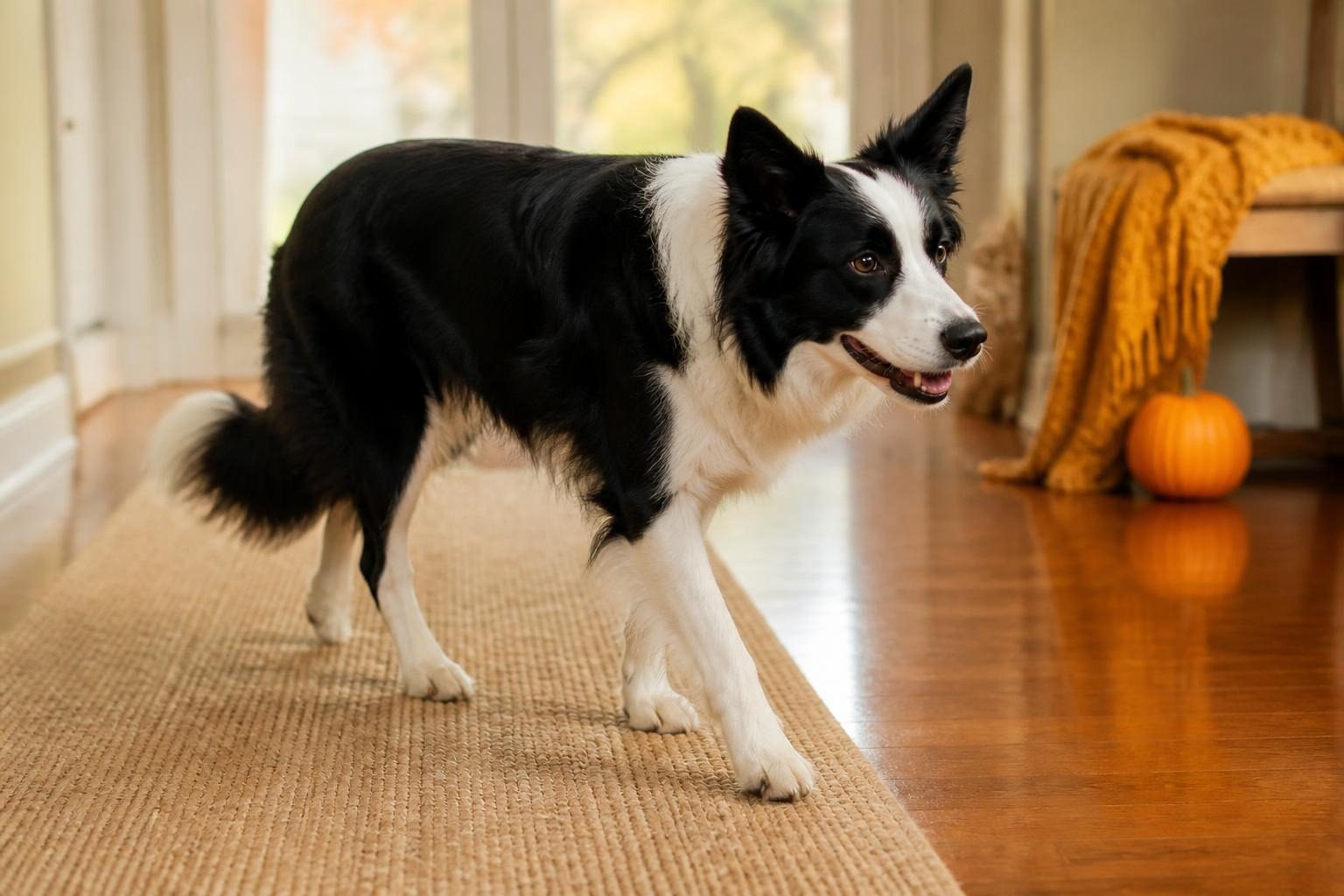

Your dog crosses the kitchen a dozen times a day. Then one morning he stops at the edge of the tile and looks at you.
Maybe he takes the long way around. Maybe he hugs the wall, or waits until you put a towel down.
That pause isn’t stubbornness. It’s information.
Why smooth floors are harder for dogs
On grass, dirt, or carpet, a dog’s nails and paw pads have something to grip. Tile, laminate, and polished wood give them much less to push against.
Most dogs manage fine walking in a straight line. The hard moments are turns, sudden starts, getting up from lying down, and the first step off a rug. Wet paws after a Florida rain shower make all of it harder.
A dog who doesn’t trust the footing may change how he moves. Shorter steps. A lower body. A slow, careful turn.
One bad slip can be enough to make a dog wary of that spot for a while. That memory can stick around even after the floor is dry.
What you might notice at home
Look at the places your dog moves every day. Bed to water bowl. Room to back door. The hallway, and the approach to the stairs.
Signs your dog may be uneasy on the floor:
- Pausing at the edge of a smooth surface
- Legs sliding out when turning
- Using rugs like stepping stones
- Struggling to get up from a bare floor
- Avoiding a room that used to be a favorite
These are worth noticing. They don’t explain why your dog is hesitating.
The floor may be the whole story. It may also be making another problem easier to see.
Make the routes easier
The good news is that the simplest changes are often cheap and quick.
Start with secured, non-slip runners along the routes your dog actually uses. Put them where your dog turns, speeds up, or gets up from lying down. Choose rugs with grippy backing and flat edges so they don’t slide or become a trip hazard.
Then check your dog’s feet. Long nails and long fur between the paw pads can both get in the way of good contact with the floor. Ask your groomer or veterinary team what length is right for your dog.
A few more ideas:
- Dry paws after rain or a trip to the yard
- Gate off slick stairs when you’re not there to help
- Set food and water bowls on a non-slip mat
- Choose a supportive bed that’s easy to step into
- Add a ramp for the car or couch if jumping looks hard
Veterinary guidance on supporting dogs with joint discomfort at home includes non-slip rugs and ramps for beds, couches, and cars. Traction aids like booties or nail grips are worth asking your veterinarian about, since fit and comfort vary from dog to dog.
Holiday floors count too
November brings guests, travel, and a lot of time in other people’s houses. A dog who is confident at home may meet slick tile at a relative’s place or a rental.
Pack a runner or a couple of bath mats for the trip. Lay them down where your dog will eat, sleep, and walk to the door. It’s a small effort that can make a strange house feel a lot more manageable.
Don’t let the rug end the conversation
Better footing is a sensible change. It isn’t the whole answer if something else is going on.
Pay attention to what changed and when. Did the hesitation start suddenly? Is it only on one surface, or do you also see trouble on stairs, in the car, or on walks? Does one leg look different from the others?
A short video of your dog moving at home can help your veterinarian see what you see. Only film if it’s safe and doesn’t delay care.
Call your veterinarian promptly for sudden trouble standing or walking, dragging or knuckling paws, crying out, a hard fall, or loss of balance. Those are not floor problems.
Where we fit
Once your veterinarian has looked at any medical concern, chiropractic care can be one part of helping your dog move with more confidence. We look at how your dog moves as a whole, from the way he gets up to the way he turns.
Because we come to you, we see your dog on the exact floors he’s worried about. All we need is a clear space.
Nobody knows your animal better than you. If your dog has started tiptoeing around the house, text us at 352-356-8665 to book.