
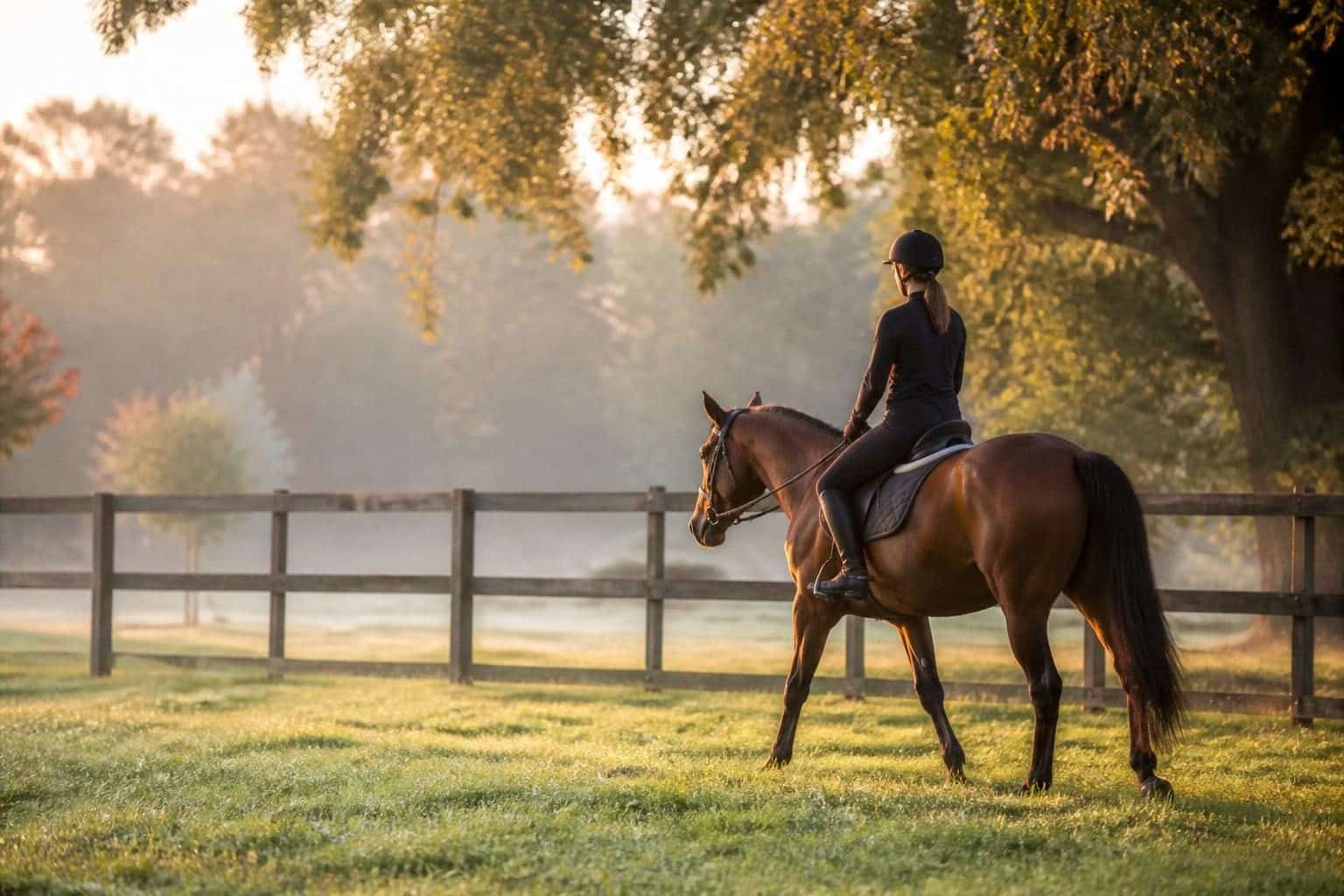

It was one of those mornings when the barn finally felt crisp. Your horse met you at the gate with his head up and his ears forward.
After months of short, sticky rides, it feels like the season just opened. The arena looks inviting. The trail looks even better.
It’s tempting to make up for lost time. That’s exactly the moment to slow down.
A lighter summer changes the starting line
Central Florida summers shape how we ride. Sessions get shorter. Some days get skipped. Rides move to dawn, and a lot of horses spend hot afternoons under shade or barn fans.
That’s good horsemanship. It also means many horses start fall with less conditioning than their riders remember.
Equine conditioning guidance is consistent on this point. Horses lose fitness when work drops off, and the longer the break, the longer it takes to rebuild. Reconditioning should happen slowly, whatever the horse’s job.
Think in workload, not just minutes
“A longer ride” can mean several changes at once. More time, faster work, hills, tighter turns, deeper footing, or another schooling day without a rest day.
Change one piece at a time when you can. Start with lighter sessions a few days a week. Then build length and intensity gradually, with breaks built in.
A simple progression might look like this:
- Easy, familiar work for the first sessions
- Extra walk breaks between harder sets
- Longer rides before faster rides
- New footing or hills added one at a time
- A rest or easy day after a harder day
Variety helps too. A trail ride, some ground poles, or a lateral session can break up the arena routine. Mixing it up keeps the work interesting for both of you without repeating the same demand every day.
Warm up longer than you did in August. A few extra minutes of walk and an easy trot give your horse time to settle into the work before you ask for more.
This isn’t a prescription for your horse. If your horse has been on stall rest, recently lame, ill, or under veterinary restrictions, follow your veterinarian’s return-to-work plan.
Fall heat still counts
Cool mornings in Ocala can turn into warm afternoons fast. Hot-weather guidance from extension specialists points out that an unfit horse struggles more with warm weather than a horse in shape.
So keep the harder rides early in the day. Let your horse drink before, during, and after work.
Watch how much your horse sweats. If the sweat seems heavy for the amount of work you did, back off and build more slowly.
Hard blowing, skin that’s hot to the touch, or a tired, unsteady horse after a ride are signs to cool your horse right away. Hose the whole body with cool water and call your veterinarian if the signs don’t settle.
Notice how your horse handles ordinary work
Your horse isn’t being lazy. He’s telling you where he is.
During routine rides, watch for changes from your horse’s usual way of going:
- Trouble holding a familiar rhythm
- Repeated resistance in one direction
- Uneven steps or a shorter stride on one side
- Slower recovery after work than usual
- New fussiness while tacking up or mounting
None of these tell you the cause. They tell you to stop adding work and look closer.
If a change repeats or worries you, start with your veterinarian. A short video and a few notes will help them see what you’re feeling from the saddle.
Keep a short ride log
Write down the date, what you did, how long it took, the footing, and the weather. Add one line about how your horse felt.
Over a few weeks, the log shows whether your horse is truly ready for more. It also gives your veterinarian, your trainer, or us something concrete to work with.
You’re not being extra. You’re being observant.
Build the season instead of testing it
The best fall riding comes from steady weeks, not one big Saturday. Choose a manageable ride. Allow recovery. Adjust only after you see how your horse responds.
Fitness faded over a whole summer, and it won’t come back overnight. That’s normal, and it’s worth respecting.
Chiropractic care can support that plan once your veterinarian has addressed any lameness or medical concern. We look at how your horse moves through the whole body, not just the spot that seems tight.
We come to you, so your horse stays in a familiar barn with familiar company. All we need is cross-ties or a hand on the lead.
If your horse’s return to fall work isn’t feeling as smooth as you hoped, we’d be glad to take a look. Text us at 352-356-8665 to book an appointment.