
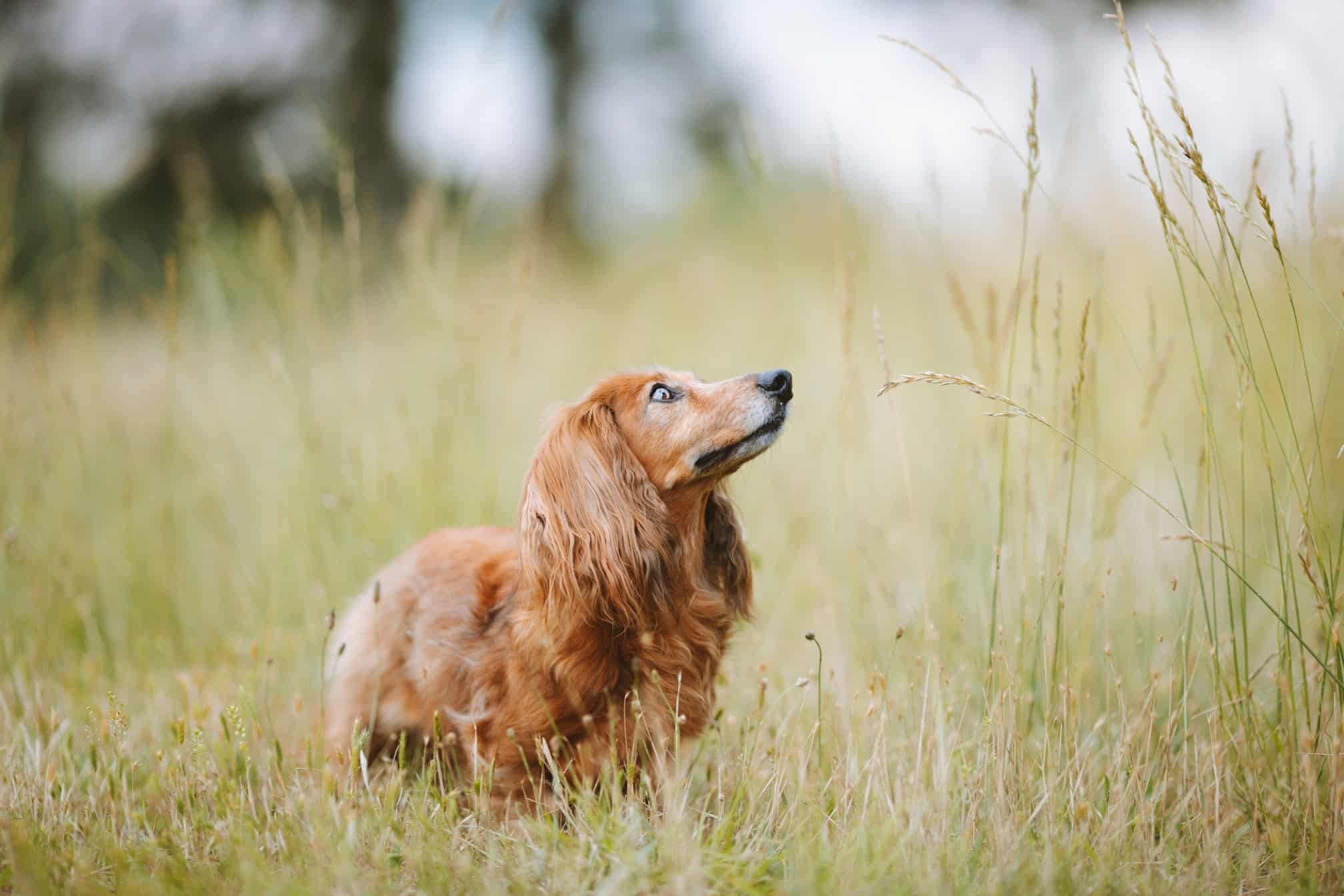

There’s a particular kind of heartbreak that comes with watching a dog get older, and if you’re reading this, you probably know exactly what we mean.
It’s not a dramatic thing. It happens slowly, in small moments you almost miss. The morning he doesn’t quite make it to the door before you do. The evening he looks at the couch and then looks at you, and you realize he’s not sure he can get up there on his own anymore. The walk that used to be the highlight of his day that he now seems relieved to finish. You tell yourself it’s just age. You tell yourself this is normal. You make adjustments, you accommodate, and somewhere along the way you quietly lower your expectations for what his daily life can look like.
Here’s what we want you to know: you may have lowered them too soon.
The benefits of chiropractic care for older dogs are some of the most meaningful outcomes we see in our entire practice, and they’re also some of the least talked about. Most senior dog owners have heard of joint supplements and pain management. Far fewer have heard a clear, honest explanation of what chiropractic actually does in an older dog’s body and why those changes matter so much for quality of life. That’s what this blog is about.
What’s Actually Happening in Your Senior Dog’s Body
Before we can talk about what chiropractic does for older dogs, it helps to understand what’s happening in the body as dogs age, because it’s more nuanced than “the joints are wearing out” and that nuance shapes everything about why chiropractic is so relevant.
Joint restriction develops over a lifetime. Every dog accumulates wear patterns from the way they move, the activities they do, old injuries that were never fully resolved, and the simple repetitive loading of years of daily life. Over time, certain joints in the spine and extremities begin to lose their normal range of motion. This isn’t always dramatic and it doesn’t always show up on imaging. It’s a functional restriction, meaning the joint looks structurally okay but isn’t moving the way it’s supposed to, and that has real consequences for how the body functions.
The nervous system responds immediately to restriction. When a joint loses normal motion, the nervous system knows. Muscles begin guarding the area to protect and stabilize it. Signals reroute around the restriction. The body starts compensating, shifting load to other areas, altering movement patterns, working around the problem rather than through it. This is the body doing exactly what it’s designed to do, and it works, but it’s expensive. Compensation costs energy, creates asymmetrical loading on joints and muscles that weren’t designed to carry that extra load, and gradually affects more and more of the body the longer it runs unchecked.
Proprioception declines. Proprioception is the body’s sense of where it is in space, and it depends on clear communication between the joints and the nervous system. When that communication is disrupted by restriction, proprioception gets fuzzy. The older dog who seems unsteady on his feet, who hesitates on uneven surfaces, who miscalculates where his back end is relative to the rest of him, is often dealing with compromised proprioception as much as anything structural. This is one of the most underappreciated contributors to senior dog mobility challenges, and it’s one of the things chiropractic addresses most directly.
Muscle mass changes with age and compensation. Older dogs naturally lose some muscle mass over time, but dogs who have been compensating for spinal restriction often show accelerated or asymmetrical muscle loss in the areas they’ve been protecting. The hindquarters are particularly common, which is why so many senior dogs seem to lose strength and power in the back end first. It’s not just aging. It’s often the physical record of years of compensation.
The Benefits of Chiropractic for Older Dogs: What Actually Changes
Here’s where we get to the part most senior dog owners haven’t heard yet, because the benefits of chiropractic care for older dogs go well beyond “he moves a little better.” Let’s go through what actually changes and why each one matters.
Restored Joint Motion and Reduced Muscular Guarding
This is the most direct benefit and the one everything else flows from. When we restore normal motion to a restricted joint, the muscles that were guarding it no longer have a reason to stay contracted. That release is often visible in real time during an appointment, and the dog who came in guarded and stiff through his topline frequently leaves with a visibly different quality of movement.
For an older dog who’s been guarding a restriction for months or years, that release can feel dramatic even when the technique itself is gentle. The body was spending an enormous amount of energy maintaining that protective tension, and when it’s no longer needed, the dog has access to energy and ease of movement that wasn’t available before.
Improved Nervous System Communication
When the spine moves well, the nervous system communicates clearly. Signals travel efficiently between the brain and the body. Muscles activate on time and in the right sequence. The body coordinates movement the way it’s supposed to. For an older dog whose nervous system has been working around restriction for an extended period, restoring that communication can produce changes that look almost surprising from the outside.
Owners often describe it as the dog seeming “more present” or “more like himself” after chiropractic care, and that’s not just an emotional observation. It’s the nervous system functioning with less interference, which affects everything from movement quality to engagement with the environment to overall demeanor.
Sharper Proprioception and Better Confidence on Their Feet
This benefit is one of the most practically meaningful for older dogs and their owners, and it’s one of the least discussed. When joint motion is restored and nervous system communication improves, proprioception sharpens. The dog who was hesitant on the stairs becomes more confident. The dog who seemed wobbly on slippery floors finds his footing more reliably. The dog who was miscalculating where his back end was starts moving with more accuracy and intention.
Better proprioception means a more confident dog, and a more confident dog is a more engaged, more active, more comfortable dog. We see this shift regularly in senior patients and it never gets old to watch.
Reduced Compensation Load on Joints and Tissues
When the source of compensation is addressed, the areas that were carrying extra load get some relief. The shoulders that were bearing more weight because the hind end was uncomfortable get to go back to their normal job. The neck that was compensating for thoracic restriction can finally release the tension it was holding. This redistribution of load is protective for the joints and tissues that were being overworked, and it’s one of the reasons consistent chiropractic care in older dogs tends to slow the progression of secondary issues rather than just managing existing ones.
Better Quality of Movement That Medications Alone Don’t Provide
We want to be careful here because we’re not anti-medication, and we’ve said that before. Pain management has a real and important role in senior dog care. But there’s a meaningful difference between a dog who moves more freely because his pain is reduced and a dog who moves more freely because the mechanical and neurological source of his restriction has been addressed. Medication manages the experience of the problem. Chiropractic addresses the mechanics of it. For older dogs, having both working together tends to produce outcomes that neither produces as effectively alone.
Improved Sleep and Rest Quality
This one surprises people, but it makes complete sense once you think about it. A dog who’s compensating for restriction is working harder physically even when he’s just standing or lying down. The muscles that are guarding a restricted joint don’t fully relax during rest. The body maintains a level of tension even in sleep that affects how restorative that rest actually is.
After chiropractic care, many senior dog owners tell us their dog seems to sleep more deeply, settle more easily, and wake up less stiff than before. That’s not a coincidence. When the body doesn’t have to guard against restriction during rest, it can actually recover during rest, and that changes how the dog feels when he wakes up in the morning.
A Meaningful Improvement in Daily Quality of Life
This is the benefit that encompasses all the others, and it’s the one that matters most to us personally because it’s the one that affects the relationship between a dog and the people who love him.
The senior dog who gets chiropractic care doesn’t become a puppy again. We want to be honest about that because unrealistic expectations aren’t fair to anyone. What he does become is a more comfortable, more capable version of who he already is. The morning greeting comes back. The enthusiasm for the leash returns. The couch becomes accessible again. The walk that felt like a chore becomes something he actually wants to do.
Those aren’t small things. Those are the moments that make up a life with a dog, and they’re worth fighting for even in the senior years, maybe especially in the senior years.
What the Research and Our Clinical Experience Tell Us
Animal chiropractic is a growing field with an expanding body of research behind it, and the outcomes we see in our practice consistently align with what the literature suggests. Restored joint mobility, improved nervous system function, reduced muscular guarding, and better proprioception are all well-documented effects of chiropractic care across species, and the older dog population responds to these benefits in ways that are both measurable and deeply visible to the owners who know their dogs best.
What we’d add from our own clinical experience is this: the senior dogs who respond most dramatically to chiropractic care are almost always the ones whose owners almost didn’t call because they thought the dog was too old or too far along for it to help. We hear that regularly and we push back on it every time, because age is not a contraindication for chiropractic care. A gentle, individualized approach that accounts for the specific health picture of an older dog is safe, appropriate, and often transformative in ways that genuinely change the trajectory of the dog’s final years.
Insider Tips from Dr. Philip and Dr. Angela
On the best age to start thinking about chiropractic for a senior dog:
We generally recommend owners start considering chiropractic care around age seven for large and giant breeds and around age nine for smaller breeds. These are the windows when early restriction patterns tend to develop before they become deeply established, and earlier intervention always produces faster, more lasting results. That said, we’ve helped dogs well into their teens and the benefits were real and meaningful even then. It’s never too late to start, but earlier is always better.
On what to realistically expect from the first few visits:
Most senior dogs show noticeable improvement within two to four sessions, though the timeline varies depending on how long the restriction has been present and how much compensation has developed around it. The first session often produces some immediate response, a loosening, a change in how the dog moves, a visible softening through the body. The full picture of improvement typically develops over several sessions as the body unwinds compensation patterns that took months or years to establish.
On combining chiropractic with other senior dog care:
Chiropractic works beautifully alongside other modalities for senior dogs. Laser therapy addresses the inflammatory component that often accompanies chronic restriction. Rehabilitation helps rebuild the muscle mass that atrophied during years of compensation. Environmental modifications reduce the daily physical load on joints that are already working harder than they should be. We always welcome conversation about the full picture of what a senior dog is dealing with so we can help position chiropractic as part of a plan that makes sense for that specific dog’s needs.
On the conversation to have with your vet:
Most veterinarians are genuinely receptive to chiropractic as a complementary approach for senior dogs, particularly when the owner frames it as something they want to add to an existing care plan rather than replace anything with. We communicate with veterinary teams regularly and actively, and the senior dogs who do best are almost always the ones whose whole care team is coordinating. If your vet isn’t familiar with animal chiropractic, we’re happy to be a resource for that conversation.
The Years That Are Left Deserve to Be Good Ones
Here’s the thing about senior dogs that we think about a lot. They’ve spent their whole lives being the best version of themselves for you. The greetings at the door, the walks, the games of fetch, the evenings on the couch, the way they’ve shown up for every single day of their lives with you without once complaining about a bad day. They gave you all of that without reservation, and they’d keep giving it if their bodies would let them.
Chiropractic care for older dogs is about making sure their bodies can support the life they still want to live for as long as possible. It’s not about reversing age or pretending that time doesn’t pass. It’s about making sure that the years that are left are as comfortable, as capable, and as full as they can possibly be.
Your senior dog deserves that. And honestly, so do you.
If your older dog is showing signs of stiffness, mobility changes, or just isn’t quite the dog he used to be, we’d love to take a look and tell you honestly what we think chiropractic can do for him. Reach out to Synchrony Chiropractic and let’s have that conversation. We serve dogs and their people throughout Gainesville, Ocala, the Villages, and surrounding areas, and we’d be honored to be part of your senior dog’s care team.